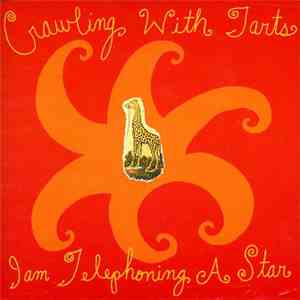
» » Crawling With Tarts - I Am Telephoning A Star
Crawling With Tarts - I Am Telephoning A Star FLAC album

Tracklist

1 A Small Exhibition At The Worksite 1:17
2 The Trunk Hill In Kwelin 1:48
3 End Loop Haiku 3:03
4 Radio Compressor Test Nr. 4 0:46
5 Drum Haiku 0:21
6 Fielding Variation Nr. 2 4:24
7 Fielding Variation Nr. 1 4:39
8 Scenes From The Ottoman Empire 7:02
9 Early American Scratch 0:53
10 Sparkling Red Stars 4:33
11 A Bird's-Eye View Of The New Buildings 6:22
12 Visiting The Seabed 2:27
13 Fielding Variation Nr. 3 4:10
14 Text Kernel Nrs. 1 + 2 1:14
15 Text Kernel Nr. 3 + 4T*9 1:21

Companies, etc.

  • Manufactured By – WMG, Inc.

Credits

  • Artwork – Suzanne Dycus-Gendreau
  • Composed By, Performer – Michael Gendreau, Suzanne Dycus-Gendreau
  • Mixed By, Edited By – Tom Erbe
  • Producer – Michael Gendreau

Barcode and Other Identifiers

  • Matrix / Runout (Mirrored): 303654 WMG, INC .
  • Mastering SID Code (Mirrored): IFPI L124
  • Mould SID Code: IFPI 2403

Crawling With Tarts - I Am Telephoning A Star FLAC album

Musician performer: Crawling With Tarts

Title: I Am Telephoning A Star

Date of release: 1997

Style: Abstract, Experimental

Genre: Electronic

Size FLAC: 1393 mb

Rating: 4.7 / 5

Votes: 422

Other Formats: DXD AA AC3 DMF MP1 MIDI DXD

Related to Crawling With Tarts - I Am Telephoning A Star FLAC Albums

Mariwyn
In many ways this is a very good album to start your appreciation of CRAWLING WITH TARTS, as it gives a much wider overview of their sound. From the structured ethnic drumming of the opening track you visit stripped-down music with structure ("The Trunk Hill In Kweilin", "Early American Scratch", "A Bird's-Eye View Of The New Buildings", "Visiting The Seabed") which is mainly deceptively simplistic percussion work, to thrashed-out improvs ("Sparkling Red Stars") which sound kinda loose garage practices with noise; looping, scratching noiseworks ("End Loop Haiku") - as you may know, they love to use old gramophones playing at a variety of unusual rpms; accidental blunders ("Radio Compressor Test Nr. 4", "Fielding Variation Nr. 1"); abstracts ("Drum Haiku"); low-level noiseworks ("Fielding Variation Nr. 2"); location recorded, depleated ersatz Jazz Improv using found junk and household items ("Scenes From The Ottoman Empire") which forms into rhythms of hollow metal and god-knows-what; gated location recordings of road-drill and metal ("Fielding Variation Nr. 3" - oh, very familiar, guys, very easily spotted) and spoken word ("Text Kernel Nrs. 1 + 2", and along with the most 'musical' music here "Text Kernel Nr. 3 + 4T÷9").The music is a constantly intriguing mixture of, mainly minimal experimentalism - their approach to loops is anything but cleaned and sterilised - it's raw and noisy, and given to the listener with few fx. Sometimes they come across like RUNZELSTIRN & GURGELSTØCK - weird Dadaist splatterings and scrawls - sometimes like a primitive, directionless PAN SONIC, but mostly the dry, literate experimentalism is plain CRAWLING WITH TARTS. On many levels their sound is tardy and shoddy - a clumsy, dusty glimpse into a mental state which is .... interesting to say the least. They have proven in the past that they can make accessible music for a much wider audience, but choose instead, nobly one must say, to inhabit a naked, fragile land where junk isn't glamourised when reprocessed and repackaged - it's Junk and, hey, love it or #@*+ off! MARCEL DUCHAMP was a great Lion of an Experimentalist - taking the everyday and commonplace, then selling it back to us as art. CWT are doing much the same - bravo to them, but be cautious when buying this album - a urinal is a urinal, no matter where it's positioned.Originally reviewed for Soft Watch.
Mariwyn
In many ways this is a very good album to start your appreciation of CRAWLING WITH TARTS, as it gives a much wider overview of their sound. From the structured ethnic drumming of the opening track you visit stripped-down music with structure ("The Trunk Hill In Kweilin", "Early American Scratch", "A Bird's-Eye View Of The New Buildings", "Visiting The Seabed") which is mainly deceptively simplistic percussion work, to thrashed-out improvs ("Sparkling Red Stars") which sound kinda loose garage practices with noise; looping, scratching noiseworks ("End Loop Haiku") - as you may know, they love to use old gramophones playing at a variety of unusual rpms; accidental blunders ("Radio Compressor Test Nr. 4", "Fielding Variation Nr. 1"); abstracts ("Drum Haiku"); low-level noiseworks ("Fielding Variation Nr. 2"); location recorded, depleated ersatz Jazz Improv using found junk and household items ("Scenes From The Ottoman Empire") which forms into rhythms of hollow metal and god-knows-what; gated location recordings of road-drill and metal ("Fielding Variation Nr. 3" - oh, very familiar, guys, very easily spotted) and spoken word ("Text Kernel Nrs. 1 + 2", and along with the most 'musical' music here "Text Kernel Nr. 3 + 4T÷9").The music is a constantly intriguing mixture of, mainly minimal experimentalism - their approach to loops is anything but cleaned and sterilised - it's raw and noisy, and given to the listener with few fx. Sometimes they come across like RUNZELSTIRN & GURGELSTØCK - weird Dadaist splatterings and scrawls - sometimes like a primitive, directionless PAN SONIC, but mostly the dry, literate experimentalism is plain CRAWLING WITH TARTS. On many levels their sound is tardy and shoddy - a clumsy, dusty glimpse into a mental state which is .... interesting to say the least. They have proven in the past that they can make accessible music for a much wider audience, but choose instead, nobly one must say, to inhabit a naked, fragile land where junk isn't glamourised when reprocessed and repackaged - it's Junk and, hey, love it or #@*+ off! MARCEL DUCHAMP was a great Lion of an Experimentalist - taking the everyday and commonplace, then selling it back to us as art. CWT are doing much the same - bravo to them, but be cautious when buying this album - a urinal is a urinal, no matter where it's positioned.Originally reviewed for Soft Watch.