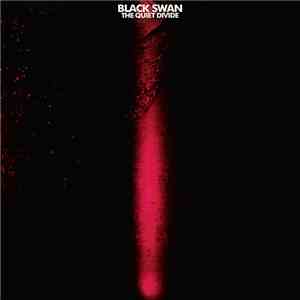
» » Black Swan - The Quiet Divide
Black Swan  - The Quiet Divide FLAC album

Tracklist

1 The Quiet Divide 4:31
2 Bleeding Hearts Alliance, Phase 1 2:55
3 DxSxDxH 3:23
4 Bleeding Hearts Alliance, Phase 2 2:08
5 Black Eulogy 2:57
6 Angel Eyes 6:45
7 Chaos Reigns 2:54
8 Bleeding Hearts Alliance, Phase 3 6:44
9 White Mourning 3:18
10 Drift Theory 2:56
11 The Quiet Divide (Reprise) 2:11

Companies, etc.

  • Copyright (c) – Black Swan Ethereal Symphony

Credits

  • Arranged By, Recorded By – Black Swan

Notes

"A symphony of misery and sorrow."

© 2011 Black Swan Ethereal Symphony

Durations not given on release.

Released in a cardboard sleeve. Comes with a Black Swan postcard.

Barcode and Other Identifiers

  • Matrix / Runout (Serial Number): 9333F 1021 - 10604C01

Other versions

Category Artist Title (Format) Label Category Country Year
EXPLP017 Black Swan The Quiet Divide ‎(LP, Ltd) Experimedia EXPLP017 US 2011
none Black Swan The Quiet Divide ‎(11xFile, FLAC, Album) Ethereal Symphony none US 2011
ETHSYM-BS002CD Black Swan The Quiet Divide ‎(Cass, Album, Ltd, Num) Ethereal Symphony ETHSYM-BS002CD US 2011


Black Swan  - The Quiet Divide FLAC album

Musician performer: Black Swan

Title: The Quiet Divide

Country: US

Date of release: 2011

Style: Modern Classical, Drone, Ambient

Genre: Electronic

Size FLAC: 1356 mb

Rating: 4.3 / 5

Votes: 922

Other Formats: VQF MMF MOD ASF APE XM MP2

Related to Black Swan - The Quiet Divide FLAC Albums

Ttexav
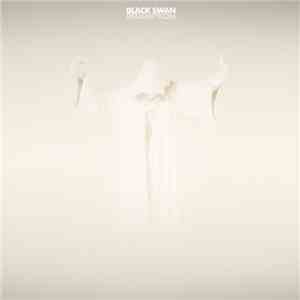
Less than a year after appearing on the scene, Black Swan returns with his sophomore release, again working with Experimedia. Unlike its predecessor, The Quiet Divide seethes with a gentle rage, quietly drowning melody with a sense of foreboding catastrophe. Perhaps a sense of naïve disappointment or vaguely unfocussed sadness is balanced by a sliver of hopefulness, not unlike Godspeed, though I may be imagining that sliver. If anything, the “drones for bleeding hearts” tag-line is still apt. Whereas an artist like William Basinski may use tape loops to trance inducing effect, BS crafts tracks that are more succinct and narrative in their composition, more explicitly expressive, which is impressive for a record that relies on the subtlety of noise. Though there seems to be careful attention to texture, melody and structure, the impression remains hazy and ephemeral. The sense of melody that made In 8 Movements a memorable standout in the ambient drone scene is still present, but the tone is darker, and one can't help but hear this as an angry manifesto, a passive resistance. This passive anger is expressed pretty clearly here, but not in an energetic way. This isn't a criticism, though the melodramatic subtitle may suggest the underlying pain which motivates the tone of the album, particularly compared with the literal titles of the preceding record and track titles (“Part I,” “Part II,” etc.)Yes, it is a quiet anger, a quiet divide, one actualized symbolically but also literally in the divisions present within the album. BS has great interest in analogue media and the relatively organic nature of its decay, as explained in this interview. The analogue media on which this release is available, cassette and vinyl, reveals a clear distinctions between sides A and B. Side A opens with a foreboding melody of “The Quiet Divide,” a brief refrain tying it to the past before the quiet of “Bleeding Hearts Alliance (Phase I)” sets in, conjuring sound design for a potential horror film. “DxSxDxH” drifts slowly into a somber melody, mournful yet also celebratory. Much of the melodic elements of his sophomore efforts are forcefully buried under static and wavering volumes of drones, a bit like conducting a symphony heard from the depths of Hades. “Bleeding Hearts Alliance (Phase 2)” creaks its way along in anticipation of the symphonic highlight of “Black Eulogy,” and the first time in which a vocal sample is used, continuing into the more melodic vocal line underlying “Angel Eyes.” A song coming from an old radio in an abandoned parlor room, a piano tinkling on its own off in some unknown recess, all buried in static giving it the impression of an unholy hymn. In part because little seems to happen, the listener is forced to engage with the piece in a careful manner. Unlike the relative coherence of the debut, this record oscillates between simple melodic layers and relative silence, giving the album a compositional trajectory in part decided by the listener's ability to maintain deep listening and ride the rollercoster, so to speak. Side B begins with “Chaos Reigns,” a subtle track of static buried samples that leads seamlessly into “Bleeding Hearts Alliance (Phase 3)”, suggesting a non-linearity to the quiet divide, an imperfect reflection. “White Mourning” returns to upfront melody, though as the title suggests, there is a haunted, mournful quality to its repetitions, like a dirge. “Drift Theory” continues this repetition, slowly breaking it down while the noise reclaims its central place in the work as an anti-climax before the coda of “The Quiet Divide (Reprise)” sends the work off. Occasionally a symphonic quality emerge through the melodies, with the impression of sections of strings and brass being cued to rise and fall, yet stripped of much of their timbre so as to make their source almost irrelevant.The listener, in meditating on the sound and the process, should question not only who the author is, but what the function of the author even means in this case. These sorts of inquiries benefits the music, as it forces the listener to consider all the sound, and not extraneous information. The prevalence of “noise” elements has the same effect, and listening on analogue media such as vinyl or tape has a similar effect, as it becomes impossible to tell if the hiss and brown noise is the result of the “author” or the medium currently played. In this sense, BS recalls Berlin's minimal dub-techno pioneers Basic Channel, bypassing the purity of digital and squarely working with the confines of analogue media as part of the process. Sonically it is reminiscent of Tim Hecker's Radio Amor for its ability to tell a story with such abstract and subtle sound, and in the end captures a similar aesthetic. Technology is relational, and technological processes can't (or at least shouldn't be) separated from human activity, but understood as an aspect of how the human is actualized and constructed. The voice has a history of being identified as an authentic source, the breath being the link to the soul. Instrumental music of all sorts has struggled with this perceived lack of “authenticity,” but tape music such as this that makes use of manipulated samples and static in a way that demands the listener rethink the categories. Similarly Black Swan plays with identity in a similar capacity, perhaps not unlike the namesake from the ballet Swan Lake. The two albums when taken together seem to be like dark reflections of one another. Even the album covers, one split to the peripheries, the other mirrored in the center, suggest a sense of unheimlichkeit, an uncanny relationship. The Quiet Divide is a fitting double to In 8 Movements, and Black Swan's works bear witness to a weakening of the ego, of both listener and “author.”Joseph SannicandroThe Silent Ballet / A CLOSER LISTEN
Ttexav
Less than a year after appearing on the scene, Black Swan returns with his sophomore release, again working with Experimedia. Unlike its predecessor, The Quiet Divide seethes with a gentle rage, quietly drowning melody with a sense of foreboding catastrophe. Perhaps a sense of naïve disappointment or vaguely unfocussed sadness is balanced by a sliver of hopefulness, not unlike Godspeed, though I may be imagining that sliver. If anything, the “drones for bleeding hearts” tag-line is still apt. Whereas an artist like William Basinski may use tape loops to trance inducing effect, BS crafts tracks that are more succinct and narrative in their composition, more explicitly expressive, which is impressive for a record that relies on the subtlety of noise. Though there seems to be careful attention to texture, melody and structure, the impression remains hazy and ephemeral. The sense of melody that made In 8 Movements a memorable standout in the ambient drone scene is still present, but the tone is darker, and one can't help but hear this as an angry manifesto, a passive resistance. This passive anger is expressed pretty clearly here, but not in an energetic way. This isn't a criticism, though the melodramatic subtitle may suggest the underlying pain which motivates the tone of the album, particularly compared with the literal titles of the preceding record and track titles (“Part I,” “Part II,” etc.)Yes, it is a quiet anger, a quiet divide, one actualized symbolically but also literally in the divisions present within the album. BS has great interest in analogue media and the relatively organic nature of its decay, as explained in this interview. The analogue media on which this release is available, cassette and vinyl, reveals a clear distinctions between sides A and B. Side A opens with a foreboding melody of “The Quiet Divide,” a brief refrain tying it to the past before the quiet of “Bleeding Hearts Alliance (Phase I)” sets in, conjuring sound design for a potential horror film. “DxSxDxH” drifts slowly into a somber melody, mournful yet also celebratory. Much of the melodic elements of his sophomore efforts are forcefully buried under static and wavering volumes of drones, a bit like conducting a symphony heard from the depths of Hades. “Bleeding Hearts Alliance (Phase 2)” creaks its way along in anticipation of the symphonic highlight of “Black Eulogy,” and the first time in which a vocal sample is used, continuing into the more melodic vocal line underlying “Angel Eyes.” A song coming from an old radio in an abandoned parlor room, a piano tinkling on its own off in some unknown recess, all buried in static giving it the impression of an unholy hymn. In part because little seems to happen, the listener is forced to engage with the piece in a careful manner. Unlike the relative coherence of the debut, this record oscillates between simple melodic layers and relative silence, giving the album a compositional trajectory in part decided by the listener's ability to maintain deep listening and ride the rollercoster, so to speak. Side B begins with “Chaos Reigns,” a subtle track of static buried samples that leads seamlessly into “Bleeding Hearts Alliance (Phase 3)”, suggesting a non-linearity to the quiet divide, an imperfect reflection. “White Mourning” returns to upfront melody, though as the title suggests, there is a haunted, mournful quality to its repetitions, like a dirge. “Drift Theory” continues this repetition, slowly breaking it down while the noise reclaims its central place in the work as an anti-climax before the coda of “The Quiet Divide (Reprise)” sends the work off. Occasionally a symphonic quality emerge through the melodies, with the impression of sections of strings and brass being cued to rise and fall, yet stripped of much of their timbre so as to make their source almost irrelevant.The listener, in meditating on the sound and the process, should question not only who the author is, but what the function of the author even means in this case. These sorts of inquiries benefits the music, as it forces the listener to consider all the sound, and not extraneous information. The prevalence of “noise” elements has the same effect, and listening on analogue media such as vinyl or tape has a similar effect, as it becomes impossible to tell if the hiss and brown noise is the result of the “author” or the medium currently played. In this sense, BS recalls Berlin's minimal dub-techno pioneers Basic Channel, bypassing the purity of digital and squarely working with the confines of analogue media as part of the process. Sonically it is reminiscent of Tim Hecker's Radio Amor for its ability to tell a story with such abstract and subtle sound, and in the end captures a similar aesthetic. Technology is relational, and technological processes can't (or at least shouldn't be) separated from human activity, but understood as an aspect of how the human is actualized and constructed. The voice has a history of being identified as an authentic source, the breath being the link to the soul. Instrumental music of all sorts has struggled with this perceived lack of “authenticity,” but tape music such as this that makes use of manipulated samples and static in a way that demands the listener rethink the categories. Similarly Black Swan plays with identity in a similar capacity, perhaps not unlike the namesake from the ballet Swan Lake. The two albums when taken together seem to be like dark reflections of one another. Even the album covers, one split to the peripheries, the other mirrored in the center, suggest a sense of unheimlichkeit, an uncanny relationship. The Quiet Divide is a fitting double to In 8 Movements, and Black Swan's works bear witness to a weakening of the ego, of both listener and “author.”Joseph SannicandroThe Silent Ballet / A CLOSER LISTEN